Introduction
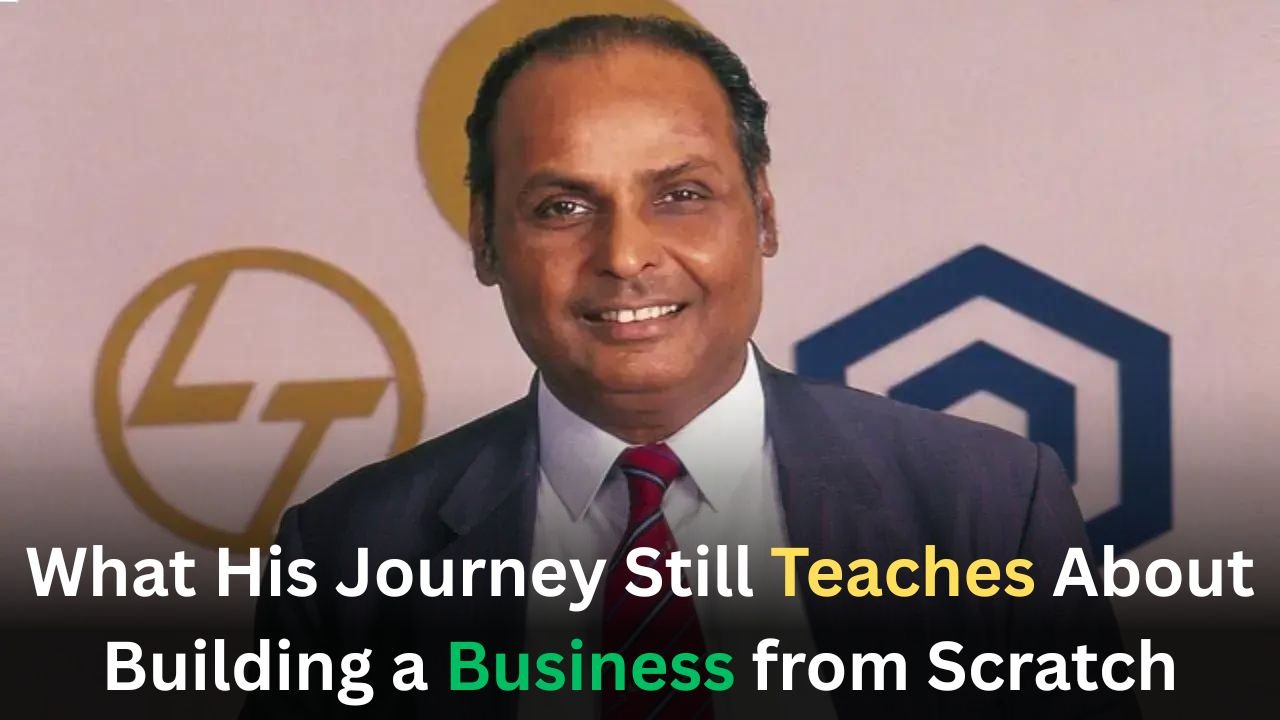
Dhirubhai Ambani is often spoken about in grand terms—visionary, billionaire, founder of India’s largest private enterprise. But for many readers, the real confusion lies elsewhere. Was his success purely about timing and luck, or were there repeatable lessons that still matter today? And more importantly, does studying his journey actually help modern entrepreneurs, investors, or professionals make better decisions?
This article is written to answer those questions honestly. Instead of retelling a glorified success story, I’ll explore Dhirubhai Ambani’s approach to business in a practical, grounded way—what worked, what was risky, and what lessons remain relevant in today’s very different economic environment.
Understanding Dhirubhai Ambani Beyond the Legend
Dhirubhai Ambani’s story is frequently reduced to a rags-to-riches narrative. While inspiring, that version misses the depth of his thinking. He wasn’t just ambitious; he was deeply observant of markets, consumer behavior, and capital flows.
What made Dhirubhai different was his ability to spot gaps others ignored. He didn’t invent demand—he unlocked it. Whether it was textiles, petrochemicals, or capital markets, his decisions were driven by one core belief: scale creates affordability, and affordability creates mass participation.
That belief shaped everything he built. And understanding that mindset is far more useful than memorizing milestones.
Real-World Perspective: What I Noticed Studying Dhirubhai’s Business Style
In my experience analyzing business leaders and entrepreneurial journeys, Dhirubhai Ambani stands out for one reason—he played offense in markets where others played defense.
What I noticed while studying his decisions is that he was comfortable being misunderstood in the short term. During regular analysis of his early years, it’s clear that many of his moves were criticized initially. Whether it was aggressive expansion or bold capital raising, he often acted ahead of consensus.
At the same time, it’s important to be honest about limitations. His approach demanded high risk tolerance and absolute conviction. This style isn’t suitable for everyone. Many businesses fail trying to replicate boldness without preparation. Dhirubhai’s confidence was backed by deep homework, not impulse.
How Dhirubhai Ambani’s Core Principles Translate to Real Life
One of Dhirubhai Ambani’s strongest principles was democratization. He believed ordinary Indians should have access—to quality products, to ownership, and to opportunity. This wasn’t charity; it was strategy.
In real-life business terms, this meant focusing on volume rather than margins. He understood that serving millions at a fair price builds resilience. This is especially relevant today for startups and businesses targeting India’s middle class.
Why SIPs Feel Useless in Sideways Markets (And What Smart Investors Do Instead)
Another key aspect was capital access. Dhirubhai treated shareholders as partners, not just financiers. By encouraging retail participation, he built trust and loyalty that extended beyond balance sheets. For modern entrepreneurs, this translates into transparency, storytelling, and long-term relationship building with stakeholders.
Dhirubhai Ambani vs Ratan Tata: Two Very Different Leadership Styles
A natural comparison is between Dhirubhai Ambani and Ratan Tata—both iconic, but fundamentally different in approach.
Dhirubhai was aggressive, market-driven, and expansion-focused. He thrived in competitive chaos and wasn’t afraid to push boundaries. His style suits fast-growing, consumer-driven markets where scale is king.
Ratan Tata, on the other hand, represents stability, ethics-led growth, and institution building. His approach works well for legacy businesses and global brand stewardship.
Neither is “better” universally. But if you’re an entrepreneur or investor, the choice between these philosophies matters. Dhirubhai’s approach suits builders who are comfortable with risk and rapid scaling. Tata’s approach suits those prioritizing longevity and governance over speed.
The Role of Risk in Dhirubhai Ambani’s Success
Risk is often glorified in Dhirubhai’s story, but it was calculated risk. He took bold steps, yes—but always with a long-term demand thesis.
For example, his belief in India’s consumption growth came decades before it became obvious. That conviction allowed him to invest heavily when others hesitated. In practical terms, this teaches an important lesson: risk without vision is gambling; risk with conviction is strategy.
However, it’s equally important to recognize that not every era allows the same margin for error. Regulatory environments and capital markets have evolved. Blindly copying past risk levels without adjusting for today’s realities can be dangerous.
Pros and Cons of Learning from Dhirubhai Ambani’s Model
Pros
Dhirubhai Ambani’s journey offers powerful lessons in vision, scale, and belief in mass markets. His ability to think long-term and act decisively is especially valuable for entrepreneurs operating in competitive environments.
His emphasis on inclusivity—whether of consumers or investors—remains highly relevant in a country like India.
Cons
His approach involved high leverage and aggressive expansion, which can be risky if misjudged. Not all businesses or individuals have the resilience or resources to survive setbacks at that scale.
There’s also a risk of oversimplifying his success story and ignoring the unique historical context in which he operated.
Frequently Asked Questions About Dhirubhai Ambani
What made Dhirubhai Ambani successful?
His success came from vision, risk-taking backed by research, and an ability to scale businesses for mass consumption.
Can entrepreneurs today follow Dhirubhai Ambani’s approach?
The principles—vision, scale, and belief in consumers—are timeless. But execution must be adapted to today’s regulatory and competitive environment.
Was Dhirubhai Ambani only focused on profits?
No. While profit mattered, his larger focus was building ecosystems that created long-term value through participation and affordability.
Is Dhirubhai Ambani relevant for salaried professionals?
Yes. His mindset around ownership, long-term thinking, and self-belief offers lessons beyond entrepreneurship.
Final Verdict: Should You Look to Dhirubhai Ambani for Inspiration?
Dhirubhai Ambani is not a blueprint to be copied—but he is a mindset worth studying. If you’re someone who believes in long-term growth, mass opportunity, and thinking bigger than your current circumstances, his journey offers valuable guidance.
However, if you prefer stability, predictability, and low-risk paths, his style may feel uncomfortable. That’s not a weakness—it’s about alignment.
My honest recommendation is this: don’t try to become the next Dhirubhai Ambani. Instead, understand how he thought, why he took risks, and how he stayed committed to his vision. Those lessons, when adapted thoughtfully, can still help you make better decisions today